


Buying vs Renting in Southern California
In Southern California, the rent vs buy decision is really a time-horizon decision. Renting often wins on flexibility and lower upfront costs. Buying can win long-term by converting payments into equity and stabilizing housing costs, but only if you can comfortably carry the full cost of ownership and plan to stay.

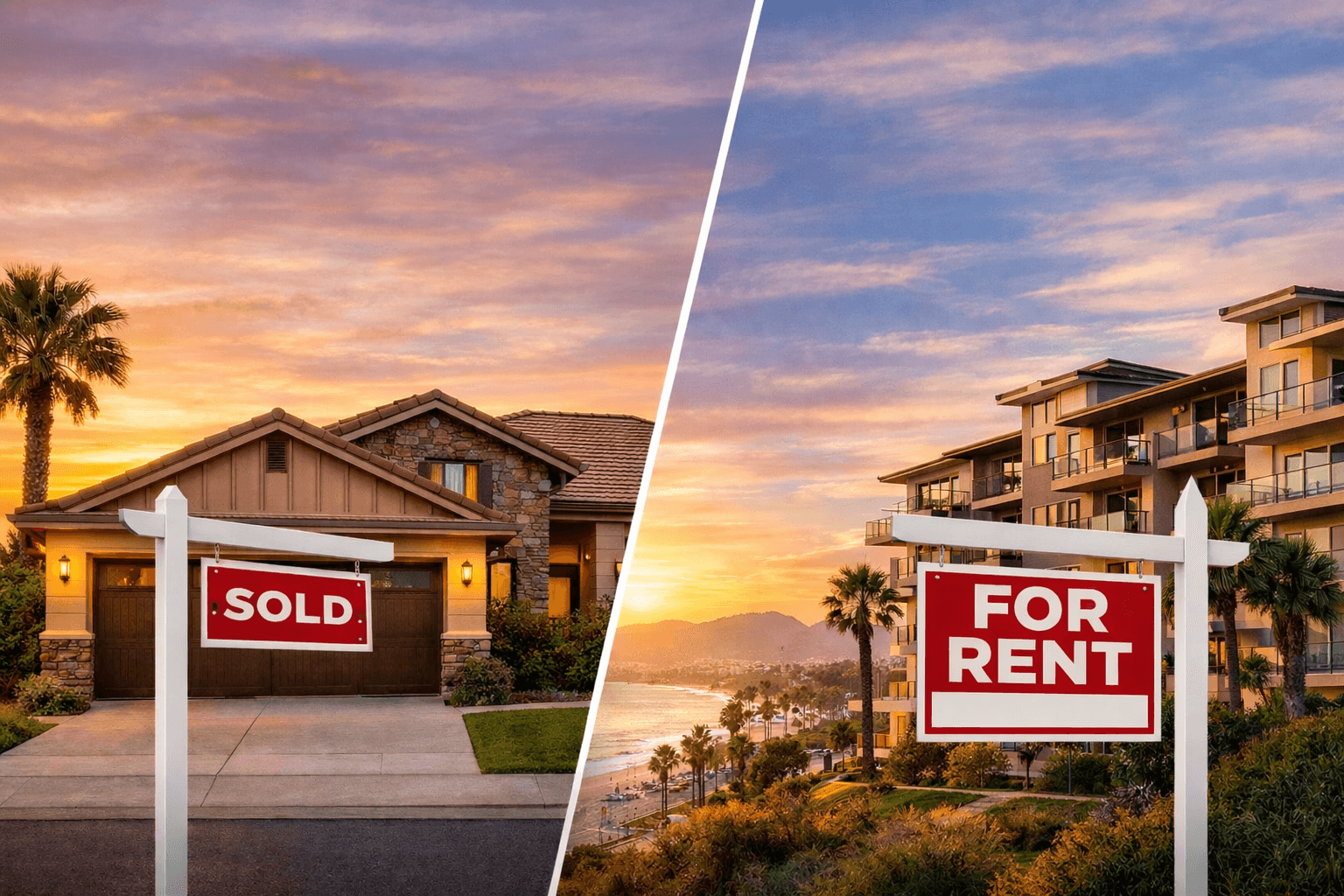
Buying vs Renting in Southern California
Southern California (SoCal) is a market where the “right” decision is less about ideology and more about time horizon, lifestyle flexibility, and how much of your monthly housing spend you can convert into long-term equity. High prices, meaningful transaction costs, and California-specific tax mechanics (notably Proposition 13) create a very different rent-vs-buy calculus than much of the country.
Below is a practical, numbers-first framework you can use to decide—without pretending there is a universal answer.
- Why the decision feels hard in SoCal
In many Southern California submarkets, the monthly cost to own (especially with 10%–20% down) can be meaningfully higher than rent for a similar home—at least at the start. Whether buying still “wins” depends on your holding period, expected rent growth, and how much you value stability and control.
SoCal rewards duration. If you can comfortably hold a home through market cycles, the long-term economics can improve dramatically.
- “Monthly payment” is the wrong comparison
When people compare rent to a mortgage payment, they often miss two things:
- Not all ownership costs build wealth. Principal paydown is forced savings; interest, taxes, insurance, HOA, and maintenance are carry costs.
- Rent is typically the maximum you pay; ownership is closer to the minimum. Homeowners absorb repairs, insurance shifts, HOA assessments, and occasional major capital items (roof, HVAC, plumbing).
A cleaner comparison is:
Interest + taxes + insurance + HOA + maintenance (true cost to own) versus rent.
Then consider principal paydown and potential appreciation as wealth-building components—separately from monthly carry cost.
- The SoCal twist: Proposition 13 and long-term cost stability
California’s property-tax framework can materially improve long-term ownership economics. For many owners, property tax growth is constrained relative to market value growth until a change in ownership triggers reassessment. The result: a cost base that can become more favorable over time—especially if rents in your area rise.
Practical takeaway: the longer you hold, the more often buying improves—assuming the payment is comfortable and the home remains desirable.
- Renting: stability can be better than you think, but it depends
SoCal is not a monolith. Some rentals have strong tenant protections; others may be exempt based on property type, ownership, and notice requirements. Your real rent risk is unit-specific.
Practical takeaway: if you’re renting, ask early whether your unit is subject to statewide and/or local rent-stabilization rules, and budget conservatively for renewals even if the headline cap looks reassuring.
- The break-even framework I use with clients
To decide intelligently, treat this like a holding-period analysis, not a monthly payment debate.
Step A — Define your time horizon
Under ~3 years: renting often wins unless you find an exceptional deal or you can hold the home as a rental later.
3–7 years: it’s a math + lifestyle decision; small changes in rates, rent growth, and appreciation can swing the outcome.
7–10+ years: buying often becomes more compelling if you can comfortably carry the payment and plan to stay.
Step B — Calculate your true cost to own
Use a planning template that includes:
Mortgage interest (early years are interest-heavy)
Property taxes
Homeowners insurance
HOA (if applicable)
Maintenance reserve (varies by property age/type; plan conservatively)
Step C — Compare to true comparable rent
Don’t compare a mortgage on a single-family home to an average apartment rent index. Compare rent for the same neighborhood, size, condition, and amenity tier.
Step D — Add transaction and opportunity costs
Buying and selling in California is not cheap. Include closing costs, potential transfer taxes (city-dependent), and resale friction. Also account for the opportunity cost of deploying a large down payment that could otherwise be invested.
- A simple illustrative scenario
In many SoCal areas, ownership can start out “rent-expensive” on a monthly basis. The homeowner’s advantage is not just appreciation—it’s the combination of principal paydown, long-term cost stability, and the option value of control.
If you buy, plan for year-one carry costs to be higher than you want, and make sure you can still comfortably save, invest, and absorb repairs. If you rent, commit to investing the monthly difference so you don’t “lose” the wealth-building component by default.
- When buying usually makes sense in SoCal
Buying tends to be the stronger move when most of these are true:
You expect to stay 7+ years (or you can hold the property as a rental later).
Your budget supports the payment comfortably, even with life changes.
You value control (renovations, pets, stability, school continuity).
You’re buying in a long-term desirable micro-location (supply-constrained, high demand, strong resale).
You can negotiate favorable terms (credits, repairs, rate buydown) and avoid overpaying.
- When renting is the smarter call
Renting is often the better decision when:
Your time horizon is short or uncertain (career, relationship, lifestyle changes).
You want liquidity for investing, entrepreneurship, or flexibility.
The monthly “own vs rent” gap is large and you will invest the difference consistently.
Buying would force quality-of-life compromises (commute, safety, schools, space) that you don’t want to live with.
- A practical decision checklist
Rent if you prioritize mobility, predictable cash flow, and lower responsibility.
Buy if you prioritize stability, control, and long-term cost hedging—and you can hold through cycles without overextending.
If you want a clean break-even analysis, model both options across 3, 5, 7, and 10 years and include true carry costs, transaction costs, and a realistic investment return assumption for the down payment and monthly savings (if renting).
Disclaimer: This article is educational and not tax, legal, or financial advice. Confirm specifics with a CPA, attorney, and licensed mortgage professional based on your circumstances.